

It’s July 2026, and if you’re still typing every single word of your blog post from scratch, you are working harder than you need to. ChatGPT is an advanced large language model developed by OpenAI that generates human-like text based on user prompts. It has moved far beyond simple chatbot interactions to become the backbone of modern AI content creation.
The landscape of digital publishing has shifted dramatically. What used to take a team of writers three days now happens in minutes. But here is the catch: just pasting a topic into the box and hitting enter no longer works. The internet is flooded with generic AI sludge. To stand out, you need to treat ChatGPT not as a writer, but as a hyper-efficient research assistant and first-draft engine.
Understanding the Core Capabilities
To use this tool effectively, you have to understand what it actually does under the hood. At its core, ChatGPT predicts the next likely word in a sequence based on patterns learned from massive datasets. This isn’t magic; it’s probability math scaled up to an insane degree.
For content creators, this means three main benefits:
- Speed: You can generate outlines, drafts, and variations in seconds.
- Versatility: It switches tones instantly-from professional B2B reports to casual social media captions.
- Ideal Generation: When you are stuck, it offers angles you might not have considered.
However, there is a significant limitation. ChatGPT does not "know" facts in the way humans do. It retrieves information based on training data cutoffs and web browsing capabilities (if enabled). In 2026, models like GPT-4o and newer iterations have better real-time access, but they still hallucinate details occasionally. Always verify statistics, quotes, and specific dates.
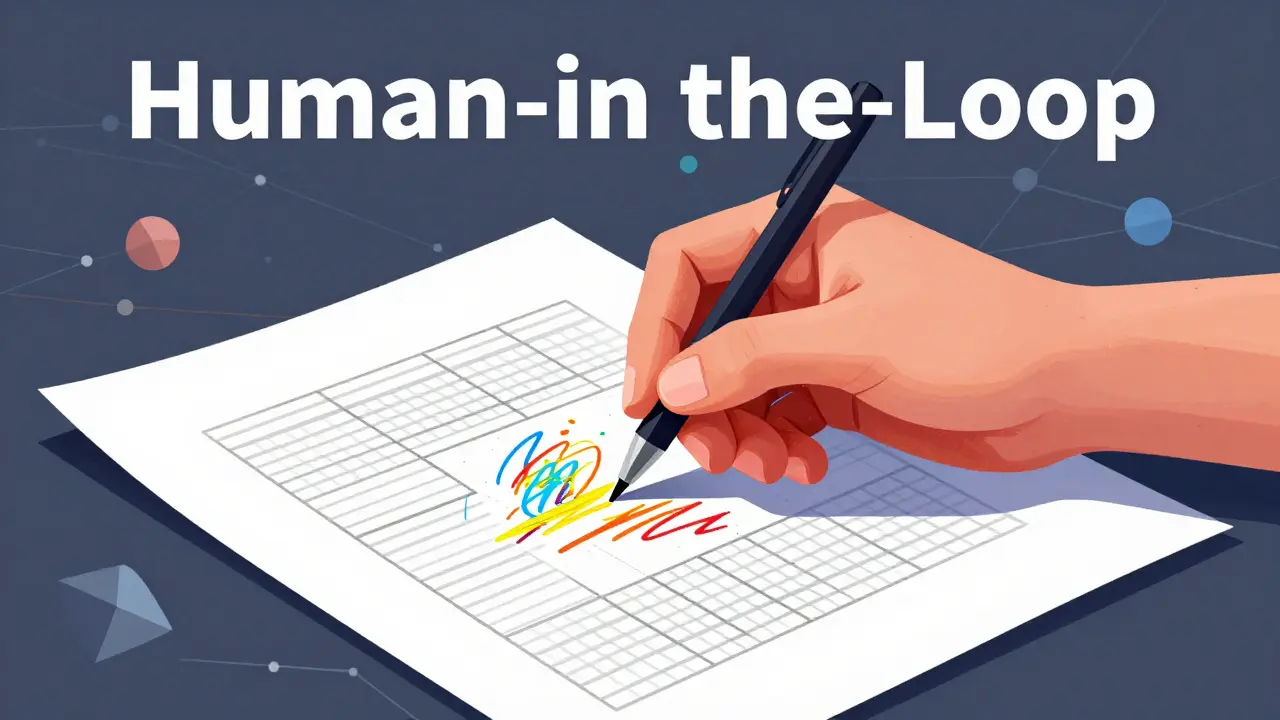
The New Workflow: Human-in-the-Loop
The most successful creators in 2026 don’t let AI write the final piece. They use a "Human-in-the-Loop" approach. Think of yourself as the editor-in-chief and ChatGPT as your junior copywriter who reads fast but lacks life experience.
Here is how the effective workflow looks:
- Briefing: You provide the context, target audience, and key points. You do this via detailed prompting.
- Drafting: ChatGPT generates the structure and initial paragraphs.
- Fact-Checking: You verify all claims against primary sources.
- Personalization: You inject personal anecdotes, opinions, and unique voice.
- Optimization: You tweak for SEO readability and flow.
This method ensures the content retains authority and E-E-A-T (Experience, Expertise, Authoritativeness, and Trustworthiness), which search engines like Google prioritize heavily.
Prompt Engineering: The Key to Quality
The quality of your output depends entirely on the quality of your input. This is called prompt engineering. A vague prompt like "Write a blog post about coffee" will yield generic, boring results. A structured prompt yields usable content.
Use the R-C-T framework for your prompts:
- Role: Assign a persona. Example: "Act as a senior marketing strategist with 10 years of experience."
- Context: Provide background. Example: "The target audience is small business owners in Adelaide who are budget-conscious."
- Task: Define the exact output. Example: "Create a 500-word outline focusing on cost-effective customer acquisition strategies."
For example, instead of asking for a product description, try: "Act as a persuasive copywriter. Write a product description for a sustainable water bottle. Highlight durability and eco-friendly materials. Use a friendly, energetic tone. Keep it under 150 words."
SEO Implications in 2026
Search engines have adapted. Google’s Helpful Content Update and subsequent algorithms are designed to detect low-value, mass-produced AI text. If your content is purely AI-generated without human oversight, it will likely rank poorly or get de-indexed.
So, how do you use ChatGPT for SEO safely?
| Practice | Why It Matters | Action Step |
|---|---|---|
| Keyword Integration | Ensures relevance to search queries | Provide specific keywords in your prompt |
| Original Insights | Builds topical authority | Add personal case studies or data |
| Readability | Reduces bounce rate | Edit sentences for natural flow and variety |
| Factual Accuracy | Maintains trust | Cross-reference all stats with official sources |
Focus on intent satisfaction. If a user searches for "best running shoes," they want recommendations, pros/cons, and buying advice. Use ChatGPT to structure this information, but fill it with genuine expertise.
Ethical Considerations and Disclosure
Transparency is becoming non-negotiable. Many publications and platforms now require disclosure when AI tools are used. While there is no universal law mandating this yet, ethical best practices suggest being open about your process.
Consider adding a small note at the end of articles: "This article was drafted with the assistance of AI tools and edited by a human expert." This builds trust with your readers. More importantly, ensure you are not plagiarizing. ChatGPT can sometimes reproduce phrases similar to its training data. Run your final draft through plagiarism checkers to be safe.

Common Pitfalls to Avoid
Even experienced users make mistakes. Here are the most common traps:
- Over-reliance: Letting the AI decide the narrative arc. Always control the story.
- Generic Tone: AI tends toward neutral, corporate speak. Force it to be more conversational or specific.
- Hallucination: Accepting fake citations. Never trust a source link provided by the AI without clicking it.
- Lack of Editing: Publishing raw output. AI makes grammatical errors and logical jumps. Edit ruthlessly.
Remember, the goal is augmentation, not replacement. Your unique perspective is what adds value. AI provides the scaffolding; you build the house.
Future Trends: What’s Next?
As we move through 2026, we are seeing multimodal integration. ChatGPT is increasingly able to analyze images, videos, and audio to generate content. Imagine uploading a video of your workshop and having AI transcribe, summarize, and turn it into a blog post automatically.
We are also seeing more specialized models. Instead of one generalist AI, industries are developing niche models trained specifically on legal documents, medical journals, or financial reports. For content creators, this means higher accuracy in technical fields but a continued need for human interpretation.
The gap between those who master these tools and those who ignore them is widening. Embrace the technology, but keep your human touch front and center.
Can I use ChatGPT to write entire blog posts?
Technically, yes, but it is not recommended for high-quality SEO. Pure AI content often lacks depth, personal experience, and factual verification. Use it for outlining and drafting, then heavily edit and add your own insights to ensure originality and authority.
Does Google penalize AI-generated content?
Google does not penalize content simply because it is AI-generated. However, it does penalize low-quality, unhelpful, or spammy content. If your AI-assisted article provides genuine value, answers user questions, and is well-edited, it can rank well. The focus is on quality, not the tool used.
How do I prevent AI hallucinations in my content?
Always fact-check specific claims, statistics, and quotes generated by ChatGPT. Use it for structure and ideas, but verify data against reputable primary sources. Enable web-browsing features if available to help the model access current information, but still review the results critically.
What is the best prompt structure for content creation?
Use the R-C-T framework: Role, Context, and Task. Specify the persona you want the AI to adopt, provide background information about the audience and topic, and clearly define the desired output format and length. Detailed prompts yield much better results than vague ones.
Is it ethical to use AI for writing?
Yes, as long as you maintain transparency and responsibility. Using AI as a tool to enhance productivity is widely accepted. However, passing off AI work as entirely your own without editing or adding value can be seen as dishonest. Disclose AI assistance where appropriate and always ensure the final content is accurate and helpful.
As a seasoned marketing professional with over ten years experience, I've made my mark in the e-commerce industry. Through my strategized campaigns, I've managed to boost online sales by a considerable margin. Passionate about dissecting consumer behaviors, I've always loved sharing my insights through writing. I regularly post articles about online marketing strategies and trends. This work keeps me constantly learning and evolving in my field.