

Social media managers used to spend their mornings staring at a blinking cursor. Now, they spend them reviewing drafts generated in seconds. We are in 2026, and the way we handle online communities has shifted from manual crafting to strategic oversight. ChatGPT is an advanced large language model developed by OpenAI that assists users with complex tasks like content generation, data analysis, and coding. It is no longer just a chatbot; it is the engine behind modern social media management workflows.
The shift isn't about replacing humans. It's about removing the friction between having an idea and publishing it. If you are still writing every caption from scratch or manually scheduling posts one by one, you are leaving efficiency on the table. This guide breaks down how to actually use this technology to scale your output without losing your brand voice.
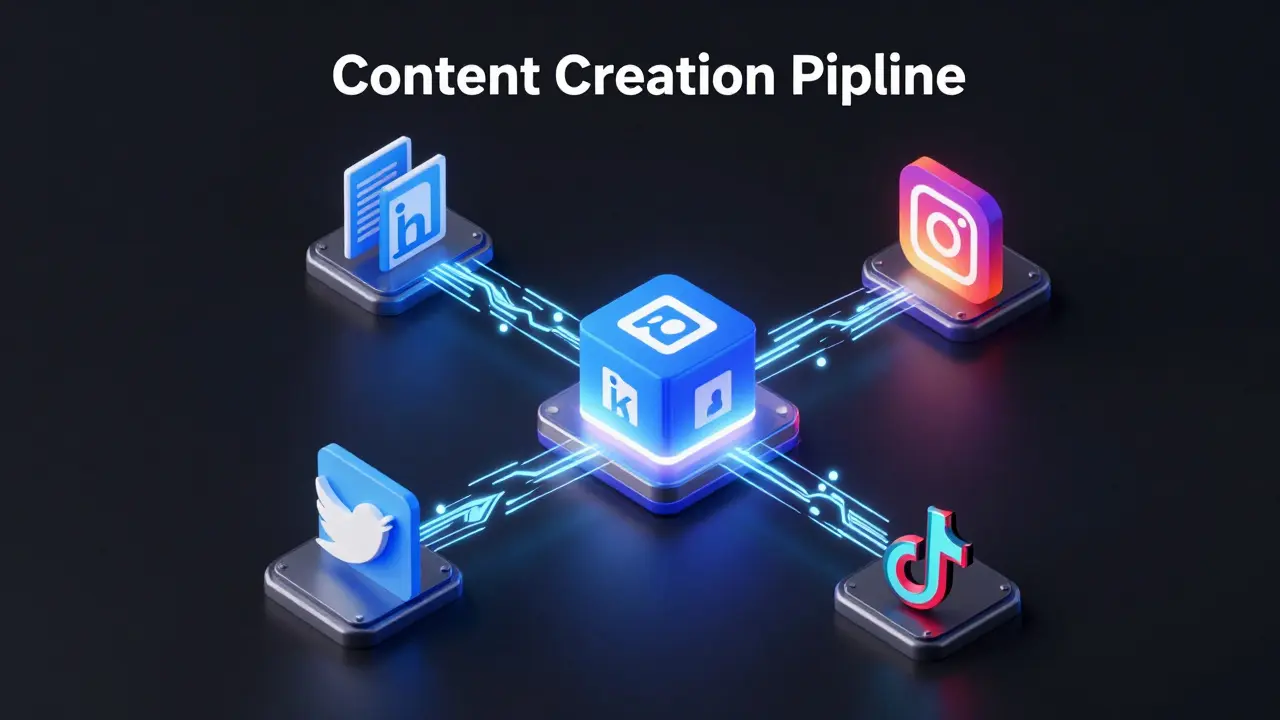
Redefining the Content Creation Pipeline
The biggest bottleneck in social media is not strategy; it's execution. You know what to post, but turning a vague concept into a polished tweet, LinkedIn article, and Instagram carousel takes time. ChatGPT compresses this timeline drastically.
Instead of asking for generic text, you need to treat the AI as a junior copywriter who needs precise direction. The key is context. When you feed the model your brand guidelines, tone of voice, and target audience demographics, the output transforms from robotic to usable. For example, instead of saying "write a post about coffee," you specify: "Write a witty, 280-character Twitter thread about the struggle of Monday morning brews, targeting remote workers aged 25-34, using a casual, empathetic tone."
- Ideation: Use the tool to brainstorm 20 angles for a single product launch. Pick the top three that resonate emotionally.
- Drafting: Generate long-form captions for LinkedIn or detailed blog summaries for Pinterest descriptions.
- Repurposing: Feed a video transcript into the model and ask it to extract five key quotes formatted for Instagram Stories.
This approach ensures you aren't just generating noise. You are creating structured content assets that require minimal editing. The goal is to reduce the time spent on first drafts from hours to minutes.
Platform-Specific Adaptation Strategies
One size does not fit all in social media. What works on TikTok fails on LinkedIn. ChatGPT excels when you force it to adapt its output to specific platform algorithms and user behaviors.
| Platform | User Intent | Optimal Prompt Structure |
|---|---|---|
| Professional networking, industry insights | "Write a thought-leadership post about [topic] focusing on personal experience and actionable takeaways. Use short paragraphs." | |
| Visual inspiration, community connection | "Create a warm, engaging caption for a photo of [subject]. Include 3 relevant questions to drive comments and 10 niche hashtags." | |
| Twitter/X | Real-time news, quick opinions | "Draft a concise, punchy thread (5 tweets) breaking down [complex topic] for a general audience. Keep each tweet under 200 characters." |
| TikTok | Entertainment, trends | "Outline a 30-second script for a trending audio challenge related to [niche]. Include visual cues and hook lines." |
Notice the difference in structure. LinkedIn demands authority and readability, while TikTok requires rhythm and visual cues. By specifying these constraints in your prompts, you ensure the AI respects the unique culture of each network. This prevents the common mistake of posting the same generic text across all channels, which algorithms increasingly penalize.
Maintaining Brand Voice and Authenticity
The fear among marketers is that AI makes brands sound identical. If everyone uses the same models, won't everything sound the same? Not if you curate the input carefully. Your brand voice is defined by your vocabulary, sentence structure, and values. You can teach ChatGPT these nuances.
Create a "Brand Voice Document" that includes examples of your best-performing posts, words you never use, and your core messaging pillars. Upload this document or paste it into the conversation context before asking for new content. For instance, if your brand is playful and irreverent, instruct the AI: "Avoid corporate jargon. Use contractions. Add a touch of humor where appropriate. Never use exclamation points more than once per paragraph."
Human oversight remains critical. The AI provides the raw material; you provide the soul. Always review the output for factual accuracy and emotional resonance. A slight tweak in wording can change the perception of a message entirely. Think of the AI as a powerful assistant that handles the heavy lifting of syntax and structure, allowing you to focus on nuance and connection.
Community Management and Customer Service
Social media is a two-way street. Engagement is often more important than broadcasting. Managing comments, DMs, and reviews can be overwhelming, especially for growing brands. ChatGPT can help streamline responses without making them feel automated.
You can set up workflows where the AI drafts initial responses to common customer inquiries. For example, if a user asks about shipping times, the AI can generate a polite, accurate response based on your current policy. However, the human manager must approve and send the final message. This hybrid approach ensures speed and consistency while maintaining accountability.
For sentiment analysis, you can paste blocks of customer feedback into the model and ask it to categorize emotions (positive, negative, neutral) and identify recurring themes. This helps you spot product issues or PR crises early. Instead of reading hundreds of comments manually, you get a summarized report highlighting urgent concerns and praise.
Analyzing Performance and Strategy
Data drives decisions, but raw numbers can be confusing. ChatGPT can interpret metrics and suggest strategic pivots. Copy-paste your monthly performance report-including impressions, engagement rates, and follower growth-and ask the AI to analyze trends.
Ask questions like: "Why did engagement drop on Tuesday posts?" or "Which content type performed best last month and why?" The model can cross-reference your data with general best practices to offer hypotheses. While it cannot access real-time private analytics directly, it can process the data you provide to find patterns you might have missed.
This analytical capability extends to competitor research. Describe a competitor's recent campaign and ask the AI to critique its strengths and weaknesses. This provides a fresh perspective on market positioning and helps you identify gaps in your own strategy.

Ethical Considerations and Transparency
As AI becomes ubiquitous, transparency matters. Audiences value authenticity. Hiding the use of AI can backfire if discovered. Consider disclosing when content is AI-assisted, especially if it involves factual claims or sensitive topics. Many brands now add subtle disclaimers or simply focus on ensuring the final output aligns perfectly with human judgment.
Bias is another concern. AI models can inadvertently perpetuate stereotypes present in their training data. Regularly audit your generated content for inclusivity and fairness. Ensure your prompts explicitly request diverse perspectives and avoid gendered or culturally biased language.
Finally, respect copyright and intellectual property. Do not use AI to replicate other creators' work verbatim. Use it to inspire original ideas, not to plagiarize. The goal is augmentation, not replacement of human creativity.
Future-Proofing Your Social Media Skills
The role of the social media manager is evolving. Technical skills in prompt engineering and data interpretation are becoming as important as creative writing. Embrace these tools to stay competitive. Experiment with new features as they roll out. Test different prompting techniques. Measure the impact on your workflow efficiency.
By integrating ChatGPT into your daily routine, you free up time for high-value activities: building relationships, developing creative concepts, and analyzing strategic outcomes. The future belongs to those who leverage technology to amplify their human strengths, not those who try to compete with machines on speed alone.
Can ChatGPT replace a social media manager?
No. ChatGPT is a tool, not a replacement. It lacks human intuition, cultural nuance, and strategic oversight. It excels at drafting and data processing, but humans are needed for brand voice curation, crisis management, and authentic community engagement.
How do I ensure AI-generated content doesn't sound robotic?
Provide detailed context, including brand voice guidelines, tone preferences, and specific audience details. Edit the output to add personal anecdotes, humor, or industry-specific slang. Always review for natural flow and emotional resonance.
Is it ethical to use AI for social media posts?
Yes, as long as you maintain transparency and quality control. Disclose AI assistance if required by platform policies or brand standards. Ensure the content is factually accurate and aligns with your brand values. Avoid using AI to deceive or manipulate audiences.
What are the best platforms for AI-assisted social media management?
ChatGPT integrates well with most platforms via manual prompting. For automation, consider tools that connect with AI APIs for scheduling and analytics. LinkedIn, Instagram, Twitter/X, and TikTok benefit most from tailored AI content strategies due to their distinct algorithmic preferences.
How can I measure the ROI of using ChatGPT for social media?
Track metrics such as time saved per post, increase in content volume, engagement rate improvements, and conversion rates. Compare performance before and after implementing AI workflows. Calculate labor cost savings against subscription fees for AI tools.
I'm Eliza Galloway, a dedicated and passionate marketing professional with over two decades of experience in the field. Apart from my day-to-day analyses of market trends, I spend my time exploring and implementing comprehensive marketing strategies for a broad range of local and international clients. I'm also an avid blogger, particularly passionate about online marketing. Sharing my knowledge and insights via my writings, I seek to motivate and inspire others in understanding the dynamic world of marketing.