

The New Reality of Content Creation
Remember when writing a blog post meant staring at a blinking cursor for two hours? Those days are gone. In 2026, ChatGPT is an advanced artificial intelligence model developed by OpenAI that generates human-like text based on user prompts. It has evolved from a novelty into the backbone of modern content marketing strategies.
But here is the catch: everyone has access to it. If you just type "write me a blog post about coffee," you get generic fluff that Google ignores. To win, you need to treat ChatGPT not as a writer, but as an ace up your sleeve-a powerful assistant that needs direction. This guide shows you how to leverage large language models (LLMs) to produce high-quality, search-engine-friendly content without losing your unique voice.
Why ChatGPT Changed the Game
Before generative AI, scaling content required hiring teams or working yourself to burnout. Now, a single marketer can produce weeks' worth of drafts in minutes. However, the value isn't in speed alone; it's in consistency and structure. ChatGPT excels at organizing chaotic thoughts into coherent outlines, suggesting angles you hadn't considered, and editing rough drafts into polished prose.
| Aspect | Traditional Writing | ChatGPT-Assisted Workflow |
|---|---|---|
| Research Time | Hours per article | Minutes (with verification) |
| Drafting Speed | Slow, linear process | Rapid iteration possible |
| Creative Block | Frequent | Rarely occurs with proper prompting |
| Tone Consistency | Varies by mood/day | Highly consistent if defined |
| Human Oversight | Minimal editing needed | Critical for accuracy and nuance |
Mastering Prompt Engineering for Better Output
The quality of your output depends entirely on the quality of your input. This is called prompt engineering, the art of crafting instructions that guide the AI to specific results. Vague prompts yield vague answers. Specific prompts yield usable drafts.
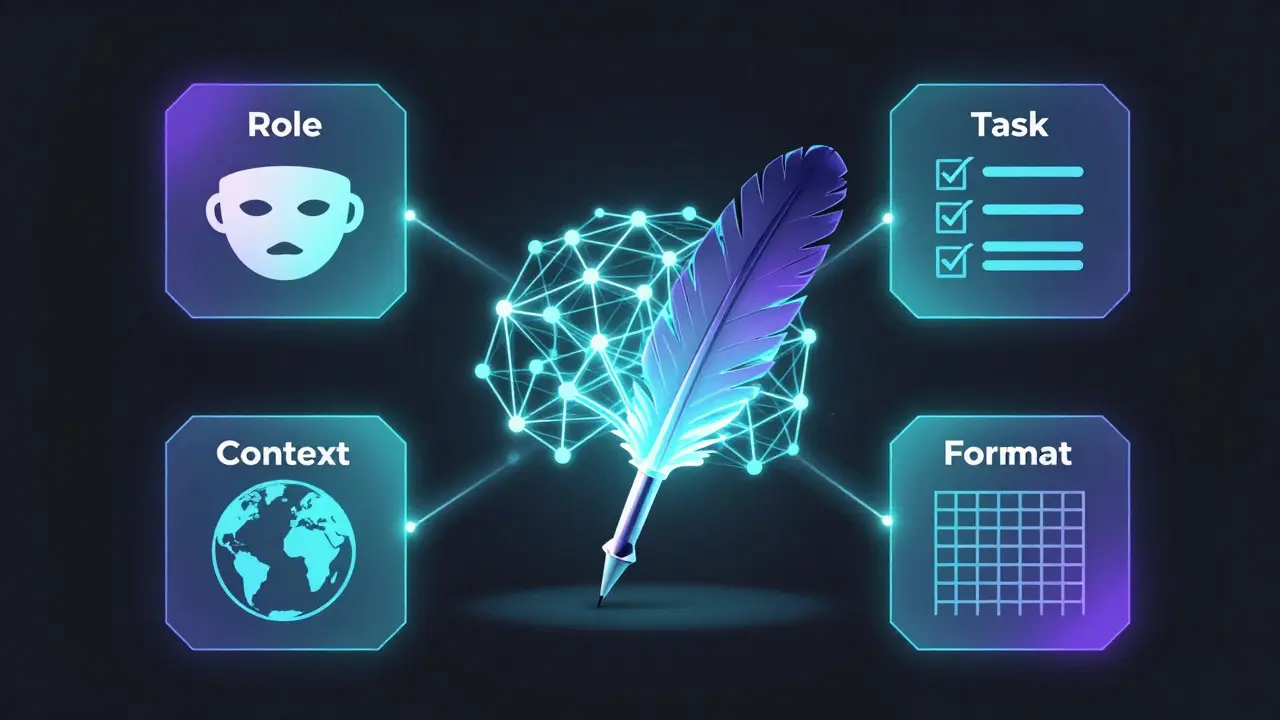
To get the best results, use the ROLE-TASK-CONTEXT-FORMAT framework:
- Role: Tell ChatGPT who it is. Example: "Act as a senior SEO copywriter with 10 years of experience in B2B SaaS."
- Task: Define what it needs to do. Example: "Write a 1,500-word article comparing CRM software."
- Context: Provide background info. Example: "Target audience is small business owners who are tech-averse. Tone should be friendly and reassuring."
- Format: Specify the structure. Example: "Use H2 headings, bullet points for features, and a conclusion with a clear call-to-action."
For instance, instead of asking "Write about email marketing," try: "Act as a digital marketing expert. Write a step-by-step guide for beginners on setting up their first email campaign using Mailchimp. Include tips for subject lines and segmentation. Keep the tone encouraging and simple."
Avoiding Common Pitfalls
One major risk is hallucination-when ChatGPT makes up facts. Always verify statistics, quotes, and technical details. Another pitfall is repetitive phrasing. AI tends to overuse words like "delve," "crucial," and "landscape." Edit these out manually to keep your content sounding human.
Integrating ChatGPT Into Your SEO Strategy
Search engines have adapted to AI-generated content. Google’s Helpful Content Update prioritizes expertise, experience, authoritativeness, and trustworthiness (E-E-A-T). This means raw AI text won’t rank well unless you add human insight.
Here is how to blend AI efficiency with human authority:
- Outline First: Use ChatGPT to generate a comprehensive outline based on top-ranking competitors. Analyze SERP features like "People Also Ask" boxes to ensure all questions are covered.
- Inject Personal Experience: Add anecdotes, case studies, or personal opinions that only you can provide. This satisfies the "Experience" part of E-E-A-T.
- Optimize for Keywords: Feed your target keywords into the prompt. Ask ChatGPT to naturally incorporate them into headings and body text without keyword stuffing.
- Edit for Readability: Break up long paragraphs. Use short sentences. Ensure logical flow between sections.
By treating ChatGPT as a research assistant and drafter, you free up time to focus on strategy and personalization-the elements that truly drive rankings.
Scaling Content Production Without Losing Quality
Consistency is key in content marketing. Posting irregularly hurts your SEO momentum. With ChatGPT, you can batch-create content. Spend one day generating outlines and drafts for the entire month. Then, spend subsequent days editing and publishing.
Create a content calendar using AI. Ask ChatGPT to suggest 30 topic ideas based on trending topics in your niche. For example, if you’re in fitness, ask: "Generate 30 blog post titles related to home workouts for busy professionals in 2026." Review the list, select the best ones, and assign them to weekly slots.
You can also repurpose existing content. Paste a long-form article into ChatGPT and ask it to convert it into:
- A LinkedIn post series
- A Twitter thread
- An email newsletter summary
- A script for a YouTube video

Maintaining Brand Voice and Authenticity
One concern brands have is sounding robotic. ChatGPT can mimic any style, but you must teach it yours. Create a brand voice guide document. Include examples of your tone, preferred vocabulary, and phrases to avoid. Upload this context into your chat sessions or reference it in every prompt.
For example, if your brand is playful and sarcastic, tell ChatGPT: "Write in a witty, slightly sarcastic tone similar to [Brand X]. Avoid formal language. Use contractions and rhetorical questions." Test different outputs until they match your desired vibe.
Authenticity also comes from transparency. Let readers know when you use AI assistance. Many audiences appreciate the efficiency as long as the final product is curated by a human expert.
The Future of AI in Content Marketing
As we move through 2026, AI tools are becoming more integrated with other platforms. Expect tighter connections between ChatGPT and CMS platforms like WordPress or Shopify. Imagine drafting an article directly inside your website editor with real-time SEO suggestions powered by AI.
Personalization will deepen. AI will help tailor content dynamically based on user behavior. A visitor interested in pricing might see a different version of a landing page than someone looking for technical specs-all generated on the fly.
However, the core principle remains unchanged: technology amplifies human intent. ChatGPT doesn’t replace marketers; it replaces mediocrity. The winners will be those who combine AI’s speed with human creativity, empathy, and strategic thinking.
Is ChatGPT free for content generation?
OpenAI offers both free and paid tiers. The free version provides basic access, while Plus and Pro subscriptions offer faster response times, priority access during peak hours, and advanced reasoning capabilities. For professional content generation, many users find the paid plans worth the investment due to reliability and higher usage limits.
Can Google detect AI-written content?
Google does not penalize AI content explicitly, but it does penalize low-quality, unhelpful content. If your AI-generated text lacks depth, originality, or factual accuracy, it will struggle to rank. Focus on adding unique insights and thorough editing to ensure your content meets E-E-A-T standards.
How do I prevent ChatGPT from hallucinating facts?
Always fact-check critical information such as statistics, dates, and quotes. Use ChatGPT to draft structure and arguments, then verify data points against authoritative sources. You can also ask ChatGPT to cite its sources, though these should still be verified independently.
What is the best way to train ChatGPT on my brand voice?
Provide detailed instructions in your prompts regarding tone, vocabulary, and style. Share examples of your previous successful content. Over time, refine your prompts based on the output. Some users create a "style guide" document to paste into each session for consistent results.
Can ChatGPT write code for websites?
Yes, ChatGPT can generate HTML, CSS, JavaScript, and Python code snippets. It is useful for debugging, creating simple components, or explaining complex coding concepts. However, always test code in a safe environment before deploying it to live sites, as errors can occur.
As a passionate marketer, I strive to connect businesses with their target audiences in creative ways. I specialize in developing and implementing digital and content marketing strategies. I am currently working as a Marketing Manager at a renowned firm. In my spare time, I love to share my knowledge about online marketing through my blog. I believe that continuous learning and sharing of knowledge are keys to growth.