

Search engine optimization used to be a game of guessing. You picked keywords, wrote articles, and hoped Google liked them. Today, ChatGPT is an advanced large language model developed by OpenAI that generates human-like text based on prompts. It has changed the rules entirely. The question isn't whether you should use it-it's how to use it without triggering penalties or producing generic garbage.
Many marketers treat ChatGPT as a magic wand. They paste a topic, hit enter, and publish the result. This approach fails because search engines prioritize helpful, original content over machine-generated filler. To succeed, you need to treat AI as a co-pilot, not an autopilot. Let’s break down exactly how to integrate this tool into your workflow for real results.
Understanding the Role of AI in Modern SEO
Before typing a single prompt, you need to understand what ChatGPT actually does well and where it falls short. It excels at structure, ideation, and drafting. It struggles with factual accuracy, current events (unless connected to live data), and genuine emotional nuance.
Google’s Helpful Content Update explicitly targets sites that rely heavily on automated content without human oversight. This means your goal isn’t to replace writers; it’s to amplify their output. Think of ChatGPT as a junior researcher who works fast but needs supervision. You provide the strategy, the facts, and the final polish. The AI provides speed and breadth.
- Ideation: Brainstorming angles and subtopics.
- Drafting: Creating first-pass outlines and introductions.
- Optimization: Rewriting meta descriptions and headers.
- Repurposing: Turning blog posts into social snippets or email newsletters.
If you try to use it for fact-checking or deep analysis without verification, you risk publishing misinformation. Always verify claims against primary sources like official documentation, academic studies, or reputable news outlets.
Step-by-Step: Using ChatGPT for Keyword Research
Keyword research is the foundation of any SEO strategy. Traditionally, this involved expensive tools and hours of manual work. With ChatGPT, you can accelerate this process significantly, provided you know how to ask the right questions.
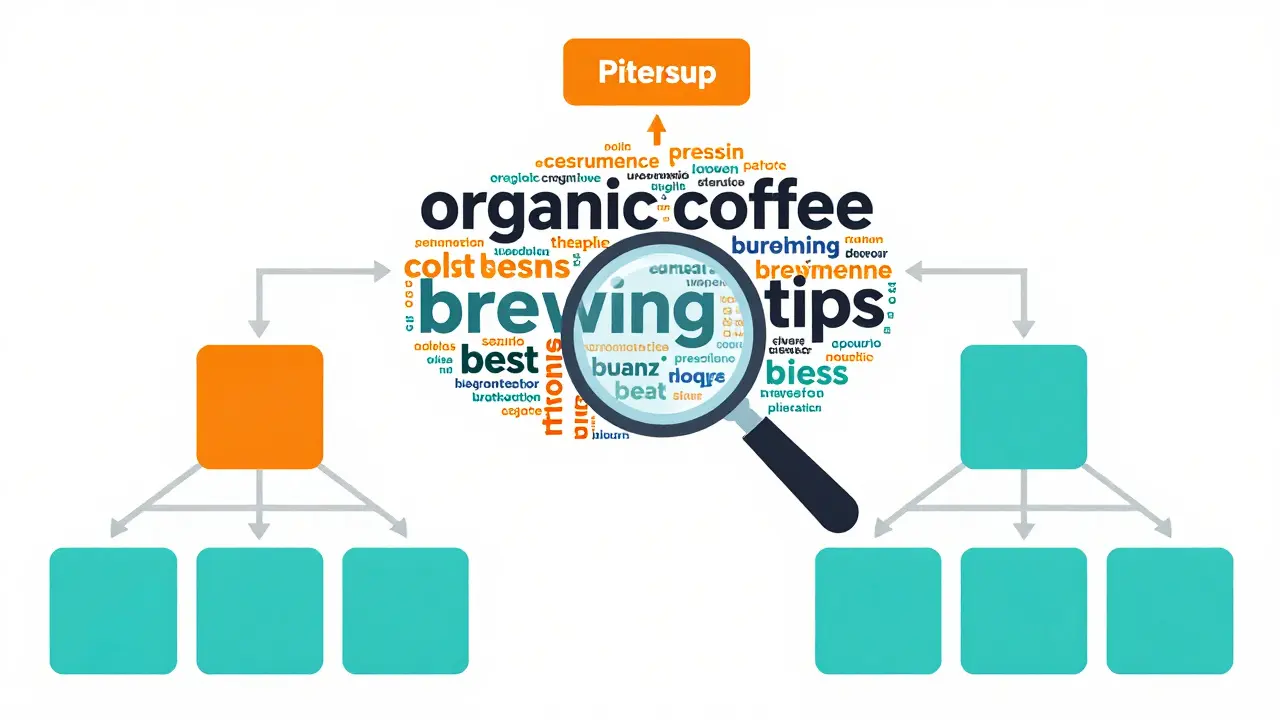
Start by defining your seed keyword. For example, if you sell organic coffee, your seed might be "organic coffee." Ask ChatGPT to generate long-tail variations based on user intent. Intent is crucial here. Users searching for "best organic coffee beans" have transactional intent. Those asking "how to brew organic coffee" have informational intent.
- Prompt for Variations: "List 20 long-tail keywords related to 'organic coffee' grouped by search intent (informational, commercial, transactional)."
- Analyze Gaps: Compare these suggestions with your existing content. Identify topics you haven’t covered.
- Validate Volume: Use a dedicated SEO tool like Ahrefs or SEMrush to check search volume and difficulty. ChatGPT cannot provide accurate real-time search metrics.
- Cluster Topics: Group similar keywords together to create pillar pages and cluster content.
This method saves time but doesn’t replace validation. Never publish content based solely on AI-suggested keywords without checking their actual performance data.
Crafting High-Quality Content Outlines
A strong outline is half the battle in writing SEO-friendly content. ChatGPT shines here because it understands logical flow and hierarchy better than most human writers under pressure.
Instead of asking for a full article immediately, ask for an outline. Provide context about your target audience and the specific problem they are trying to solve. For instance: "Create a detailed outline for a blog post titled 'How to Start a Home Garden for Beginners.' Include H2 and H3 headers, bullet points for each section, and suggested word counts."
Review the generated outline critically. Does it follow a logical progression? Are there missing steps? Add your own expertise. If you know that soil pH testing is critical for beginners, ensure that step is included. This hybrid approach ensures the content is both structured comprehensively and grounded in reality.
Once the outline is approved, you can use ChatGPT to draft sections one by one. This prevents the AI from losing focus or hallucinating details later in the text. Keep prompts specific: "Write the introduction for the 'Soil Preparation' section using a friendly, encouraging tone. Mention the importance of drainage."
Optimizing On-Page Elements
On-page SEO involves optimizing individual web pages to rank higher. This includes title tags, meta descriptions, header tags, and internal linking. ChatGPT can automate much of this tedious work.
| Task | Manual Approach | AI-Assisted Approach |
|---|---|---|
| Title Tags | Writing unique titles for each page manually | Generating 10 variations per page, selecting the best fit |
| Meta Descriptions | Crafting compelling summaries within 160 characters | Instantly generating multiple options with different CTAs |
| Header Structure | Planning H1-H6 hierarchy during editing | Pre-generating structured headers before writing begins |
| Internal Links | Manually finding relevant older posts | Suggesting anchor texts and link opportunities based on context |
For meta descriptions, clarity and call-to-action are key. Ask ChatGPT: "Write three meta descriptions for this article about home gardening. Each must include the keyword 'beginner garden tips' and end with a clear call to action. Keep under 155 characters." Review the outputs for readability and relevance. Avoid keyword stuffing; natural language performs better.
Header tags help both users and crawlers understand your content structure. Ensure your H1 is unique and descriptive. Use H2s for main sections and H3s for subsections. ChatGPT can suggest these headers, but always align them with the actual content flow.
Enhancing Readability and User Experience
Google measures user engagement through metrics like dwell time and bounce rate. If your content is hard to read, users leave quickly. ChatGPT can help improve readability scores significantly.
Ask the AI to simplify complex sentences. Prompt: "Rewrite this paragraph to be more concise and easier to understand for a general audience. Use active voice and shorter sentences." This helps reduce cognitive load, making your content accessible to a wider range of readers.
Also, consider formatting. Long blocks of text scare readers away. Use bullet points, numbered lists, and bold text to break up information. ChatGPT can reformat dense paragraphs into scannable lists instantly. For example, convert a list of benefits into a bulleted format with brief explanations for each point.
Remember that while AI improves structure, it cannot replicate genuine empathy or personal experience. Inject your own voice, anecdotes, and opinions. This human touch builds trust and keeps readers engaged longer.
Avoiding Common Pitfalls and Penalties
Using ChatGPT for SEO comes with risks. The biggest danger is producing low-quality, repetitive content that violates Google’s spam policies. Here’s how to avoid common mistakes:
- Hallucination: AI sometimes invents facts. Always verify statistics, quotes, and technical details with reliable sources.
- Lack of Originality: Generic AI content stands out negatively. Add unique insights, case studies, and personal experiences.
- Tone Mismatch: Ensure the AI’s tone matches your brand voice. Adjust prompts to specify style (e.g., professional, casual, humorous).
- Over-Optimization: Don’t force keywords unnaturally. Focus on semantic relevance and natural language usage.
Regularly audit your AI-generated content. Use tools like Copyscape to check for accidental plagiarism. Read every piece aloud to catch awkward phrasing. If it sounds robotic, rewrite it until it sounds human.
Transparency is also emerging as a best practice. While not legally required everywhere, disclosing that AI assisted in creation can build trust with savvy readers. However, never let AI write your entire strategy or make final decisions. Human judgment remains irreplaceable.
Integrating ChatGPT into Your Daily Workflow
To maximize efficiency, integrate ChatGPT into your daily routine rather than treating it as an occasional tool. Set up standard templates for common tasks.
Create a library of proven prompts for recurring needs. For example, save a prompt for generating FAQ sections, another for rewriting old blog posts, and one for creating social media captions. This consistency speeds up production and maintains quality standards.
Collaborate with your team. Share successful prompts and strategies. Encourage writers to use AI for brainstorming but insist on manual review for final publication. Establish clear guidelines on what can be automated and what requires human input.
Monitor performance closely. Track rankings, traffic, and engagement metrics for AI-assisted content versus purely human-written pieces. Use this data to refine your approach. If certain types of AI content perform poorly, adjust your prompting strategy or limit its use in those areas.
Finally, stay updated on algorithm changes. Search engines continuously evolve their ability to detect and evaluate AI content. What works today may change tomorrow. Adapt quickly and keep learning new techniques to stay ahead of the curve.
Can I use ChatGPT to write entire blog posts?
Technically yes, but it’s not recommended for SEO success. Pure AI-generated content often lacks depth, originality, and factual accuracy. Google penalizes sites with thin or unhelpful content. Instead, use ChatGPT for outlining, drafting sections, and editing, then add your own expertise and voice to finalize the post.
Does Google penalize AI-generated content?
Google doesn’t penalize content simply because it’s AI-generated. It penalizes content that is unhelpful, low-quality, or created primarily to manipulate rankings. If your AI-assisted content provides genuine value, answers user queries thoroughly, and includes human oversight, it will likely perform well.
How do I ensure my AI content is original?
Add unique insights, personal stories, and specific examples that only you can provide. Verify all facts and data points. Rewrite AI drafts to match your brand voice. Use plagiarism checkers to ensure no accidental copying. Originality comes from your perspective, not just the words themselves.
What are the best prompts for SEO content?
Effective prompts are specific and contextual. Include details like target audience, tone, keyword focus, and desired structure. Examples: "Write an introduction for [topic] targeting [audience] with a [tone] tone, including the keyword [keyword]." or "Create an outline for [topic] with H2 and H3 headers focusing on [specific angle]."
Is ChatGPT free for commercial use?
OpenAI allows commercial use of content generated via ChatGPT, including free versions. However, terms may change, so always review the latest OpenAI policy. For enterprise-level features, priority support, and enhanced privacy, paid plans like Plus or Enterprise offer additional benefits.
I'm a Marketing Expert with over a decade of experience in the industry. I specialise mainly in online marketing and have worked with numerous global brands to elevate their online presence, build their brand image, and increase their sales. My passion lies in creating meaningful and engaging campaigns that truly resonate with audiences. In my spare time, I enjoy sharing my knowledge and experiences through my blog where I primarily write about the latest trends and tricks in online marketing.