

Most people think ChatGPT is just for writing essays or answering random questions. But if you’re running social media accounts and not using it yet, you’re leaving real growth on the table. In 2025, brands that use ChatGPT smartly are posting faster, engaging more, and growing followers without hiring extra staff. It’s not magic-it’s strategy.
Stop wasting hours on content creation
How many times have you sat in front of a blank screen trying to come up with your next Instagram caption? Or spent an hour rewriting the same LinkedIn post three different ways? That’s time you could’ve spent responding to comments, analyzing analytics, or even taking a break.
ChatGPT can generate 20 unique post ideas in under a minute. Just give it a simple prompt like: “Give me 10 Instagram caption ideas for a small bakery selling sourdough bread, targeting busy parents aged 30-45.” It doesn’t just spit out generic lines-it adapts to tone, audience, and platform.
Try this: Paste your last five top-performing posts into ChatGPT and ask, “What patterns do you see in these posts? Write five new ones using the same style but different angles.” You’ll get content that sounds like you-because it’s built from your own data.
Turn comments into conversations
Responding to comments isn’t just polite-it’s algorithm candy. The more replies you get, the more your posts show up in feeds. But replying to 50+ comments a day? Exhausting.
ChatGPT can draft replies that feel human. Feed it a comment like: “I wish I could make bread this good at home!” and ask: “Write a warm, encouraging reply that invites them to try our beginner sourdough kit.” It’ll give you options: casual, funny, helpful, or emotional.
Pro tip: Never copy-paste directly. Tweak one word. Add an emoji. Mention their name if you can. That tiny personal touch keeps it from feeling robotic. You’re not replacing yourself-you’re scaling your presence.
Build a content calendar in 15 minutes
Planning a month of posts used to mean spreadsheets, sticky notes, and stress. Now? Just tell ChatGPT: “Create a 30-day social media calendar for a fitness coach who helps women over 40 lose weight. Include posts for Instagram, Facebook, and TikTok. Mix educational, motivational, and behind-the-scenes content. Avoid clichés like ‘just do it.’”
It’ll return a full calendar with:
- Post topics (e.g., “3 easy moves to strengthen your core without equipment”)
- Platform-specific formats (Reels script, carousel text, TikTok hook)
- Hashtag suggestions per post
- Best posting times based on audience behavior
You can even ask it to space out promotions so you’re not selling every day. One client used this method and cut their planning time from 8 hours to 20 minutes-while increasing engagement by 42% in six weeks.
Repurpose one piece of content into ten
Did you film a 10-minute YouTube video on “How to Start Strength Training After 40”? Don’t let it sit there. ChatGPT can turn it into:
- Five Instagram carousels with step-by-step tips
- Three TikTok hooks with trending audio suggestions
- Two LinkedIn articles with professional takeaways
- One Twitter thread breaking down the science
- A newsletter signup offer with a free PDF summary
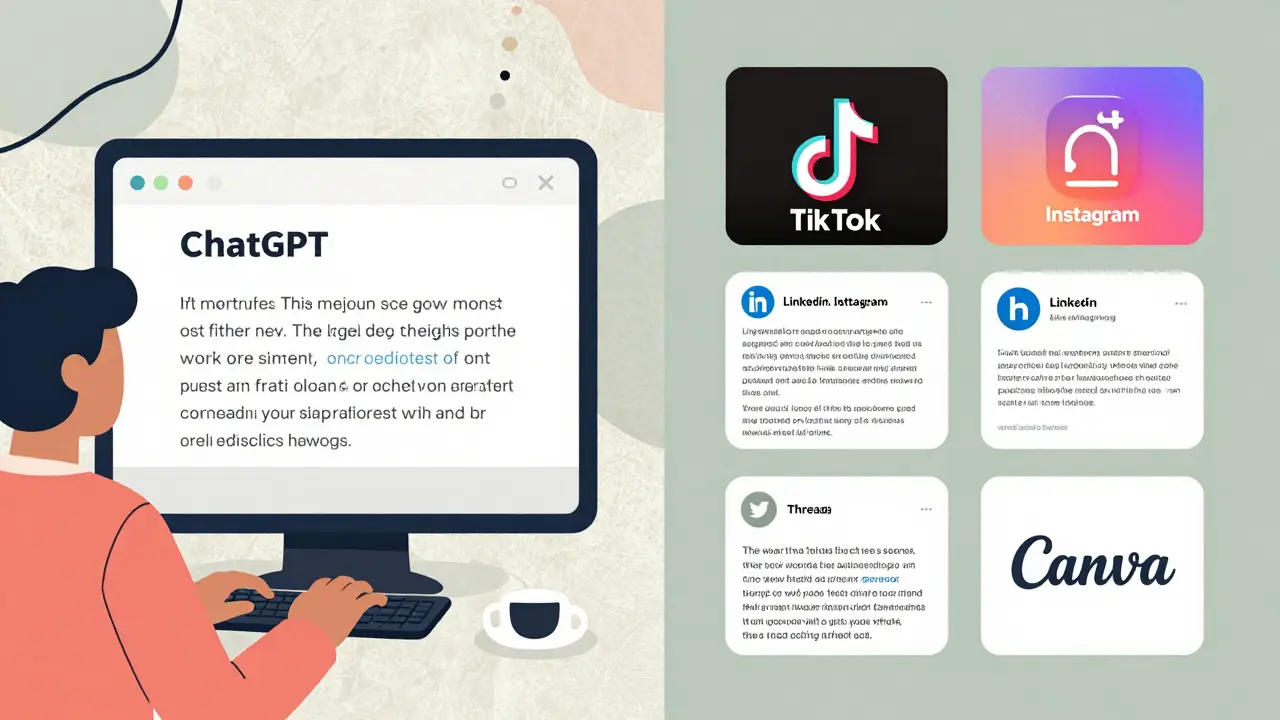
Just paste the transcript or key points and say: “Break this down into 10 social media assets across platforms. Keep the tone warm and empowering.” It’ll even suggest visuals you can create with free tools like Canva.
This is how small teams compete with big brands. One person, one video, ten pieces of content-no extra hires needed.
Find your best-performing content-and double down
What if you could instantly know which of your old posts is still working? ChatGPT can analyze your top 20 posts from the last year and tell you what made them succeed.
Upload your analytics (or paste the text of your top posts) and ask: “Analyze these posts. What emotional triggers, keywords, or formats appear most often in the highest-engaging ones?”
You might find that posts with phrases like “I used to feel…” or “This changed everything for me” get 3x more shares. Or that videos with a “before/after” structure have the highest save rate. Now you know what to make more of.
This isn’t guesswork. It’s data-driven content planning-powered by AI.
Test headlines before you post
Headlines make or break clicks. But how do you know if your caption will land? Test it.
Write three versions of your post headline and ask ChatGPT: “Which of these three headlines is most likely to get clicks from women aged 35-50 interested in home workouts? Rank them by emotional appeal and clarity.”
It’ll tell you which one feels urgent, which one feels too vague, and which one sounds like something a friend would say. You’ll stop guessing and start choosing based on real psychology-not luck.
Stay ahead of trends without chasing them
Trends come and go. But what if you could spot the ones that stick?
Ask ChatGPT: “What are three emerging social media trends in the wellness space for Q1 2026?” It won’t give you the latest TikTok dance. Instead, it’ll point to real shifts: like “quiet luxury” aesthetics in fitness content, or the rise of “anti-hustle” messaging among burnout audiences.
Use that insight to shape your next campaign-not react to it. That’s how you become a trendsetter, not a follower.

Watch out for these three mistakes
ChatGPT is powerful, but it’s not perfect. Here’s what trips people up:
- Using the same tone everywhere. Your TikTok voice shouldn’t sound like your LinkedIn post. Always specify platform and audience in your prompt.
- Posting without editing. AI can say “you’re” when it means “your.” Always read it aloud. If it sounds like a robot wrote it, tweak it.
- Ignoring visuals. ChatGPT can’t make images-but it can describe them. Ask: “What kind of photo or video would go best with this caption?” Then use free tools like Canva or Leonardo AI to build it.
The best users treat ChatGPT like a smart intern-not a replacement.
Start small. Then scale.
You don’t need to automate everything tomorrow. Pick one thing:
- Use ChatGPT to write 3 captions this week
- Turn one blog post into five social assets
- Generate replies for your top 10 comments
Do that for a week. Notice how much time you get back. Then add another task. In a month, you’ll be posting consistently, engaging deeply, and growing without burnout.
ChatGPT doesn’t replace creativity. It frees you to be more creative.
Can ChatGPT write posts that sound like my brand?
Yes-if you give it examples. Paste 3-5 of your best past posts and say, “Write new content in this exact tone.” It learns from your style, not just keywords. The more examples you give, the more accurate it gets.
Is it okay to use ChatGPT for all my social media content?
You can, but you shouldn’t. AI is great for ideation, drafting, and scaling-but human touch builds trust. Use it to save time on repetitive tasks, then add your personality in edits. People connect with people, not algorithms.
Which platforms work best with ChatGPT?
All of them-but each needs different prompts. Instagram wants short, punchy captions. LinkedIn needs professional insights. TikTok thrives on hooks and trends. Always specify the platform in your request. ChatGPT adapts better when you give it context.
Does using AI hurt my reach on social media?
No. Platforms don’t penalize AI content. What hurts reach is low engagement-boring posts, fake interactions, or spammy hashtags. If your AI-generated content feels authentic and sparks real conversations, it’ll perform well. Focus on value, not origin.
How often should I update my ChatGPT prompts?
Every 4-6 weeks. Your audience’s interests shift. New trends emerge. Refresh your prompts by adding new examples of top-performing posts. This keeps your AI output fresh and aligned with what’s working now-not last quarter.
What to try next
Try this today: Open ChatGPT and type:
“I run a small business selling handmade candles. My audience is women 28-45 who care about sustainability and self-care. Give me 5 Instagram post ideas that feel personal, not salesy.”
Then pick one. Write it. Post it. See what happens.
You don’t need to be an expert. You just need to start.
I'm Eliza Galloway, a dedicated and passionate marketing professional with over two decades of experience in the field. Apart from my day-to-day analyses of market trends, I spend my time exploring and implementing comprehensive marketing strategies for a broad range of local and international clients. I'm also an avid blogger, particularly passionate about online marketing. Sharing my knowledge and insights via my writings, I seek to motivate and inspire others in understanding the dynamic world of marketing.