
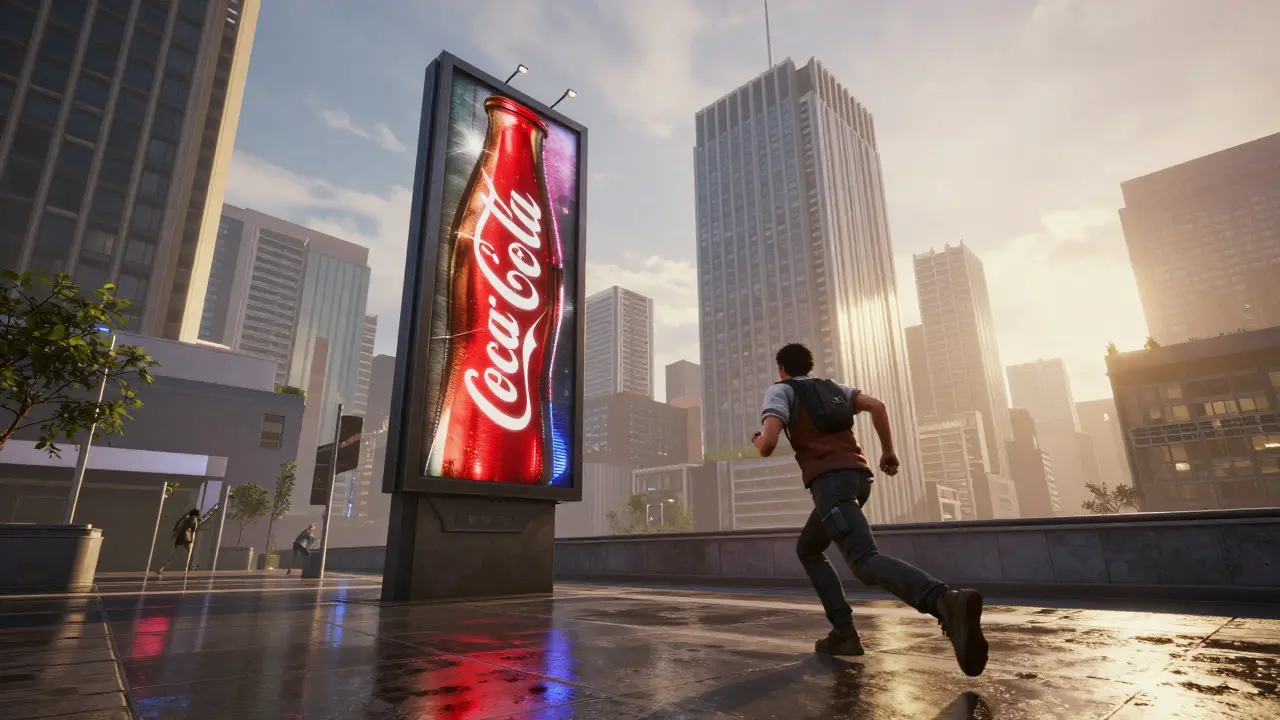
Imagine playing your favorite battle royale game. You’re sprinting through a city skyline, gun in hand, when suddenly you spot a familiar logo on a billboard-Coca-Cola, Nike, or even a local coffee shop. You don’t skip it. You don’t even notice it’s an ad. That’s the power of in-game ads today.
Why In-Game Ads Are No Longer Just a Niche Experiment
In 2025, gamers spent over 2.7 billion hours per day playing video games. That’s more time than people spend watching Netflix. And advertisers are finally catching on. In-game ads aren’t some experimental side project anymore-they’re a core part of marketing strategies for brands big and small.
Unlike banner ads or pre-roll videos, in-game ads live inside the player’s world. They’re not interruptions. They’re environment. A billboard in a racing game isn’t annoying-it’s realistic. A branded jersey on a virtual athlete feels like part of the sport. That’s why 78% of players say they don’t mind in-game ads if they feel natural, according to a 2025 survey by Newzoo.
Brands like Red Bull, Adidas, and Hyundai have moved beyond sponsorships. They’re embedding their products directly into game worlds. Red Bull’s energy drink appears in FIFA matches. Hyundai’s electric cars drive through Asphalt 9’s city tracks. These aren’t just logos slapped on walls-they’re integrated into gameplay mechanics, storylines, and even character customization.
How In-Game Ads Work (And Why They Convert Better)
In-game ads come in three main forms: static, dynamic, and interactive.
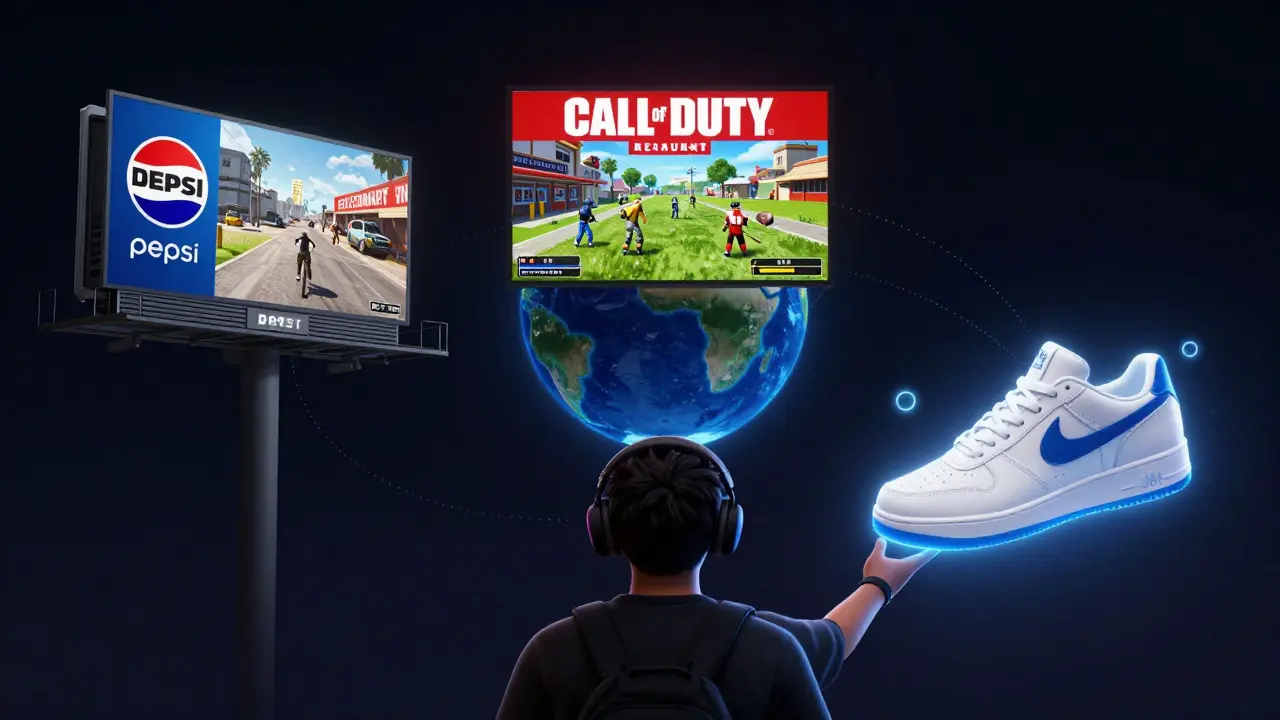
- Static ads are fixed in the game environment-billboards, posters, product placements. Think of a Pepsi logo on a wall in Call of Duty. These are cheap to implement and great for brand awareness.
- Dynamic ads change based on real-time data. A sports game might show a local restaurant’s ad during a match in Chicago, then switch to a different one in Tokyo. This is powered by real-time ad servers that update based on player location, time of day, or even weather.
- Interactive ads let players engage. A player might unlock a free virtual item by trying a new soft drink, or race a branded car in a mini-challenge. These ads have 3x higher engagement than static ones.
Why do they work so well? Because they tap into immersion. When you’re deep in a game, your brain stops filtering out stimuli. Ads become part of the experience, not something you’re forced to endure. That’s why in-game ads have a 42% higher recall rate than TV commercials, per a 2024 study by the University of Southern California.
Who’s Winning With In-Game Ads Right Now
It’s not just the giants. Small businesses are finding unexpected success.
A local pizza chain in Austin, Texas, placed a branded delivery van in the open-world game Grand Theft Auto Online through a partnership with a modding studio. Within two weeks, their app downloads increased by 180%. Players started texting friends: “Dude, I saw Tony’s Pizza in the game-I ordered it IRL.”
Another example: a fitness app called FitTrack partnered with the mobile game Stumble Guys to offer players a free week of premium features if they completed a 10-minute workout in real life. The campaign drove 250,000 new sign-ups in 30 days. The ad didn’t just show the logo-it gave players a reason to act.
Even indie developers are cashing in. Games like Animal Crossing: New Horizons and Roblox let creators sell branded virtual items. A pair of virtual Nike sneakers sold for $1,200 in Roblox in 2024. The brand didn’t pay for ad space-they made the item itself the product.
The Hidden Risks (And How to Avoid Them)
In-game ads aren’t magic. Get it wrong, and players revolt.
Remember when Grand Theft Auto V had a fake ad for a fictional bank called “Merryweather”? Players loved it because it fit the game’s satire. But when a real bank tried to do the same in a serious game like Civilization VI, fans called it “crass.” Context matters.
Three big mistakes brands make:
- Forcing ads into the wrong game-putting a luxury car ad in a kids’ game? That’s tone-deaf.
- Overloading the environment-too many billboards, too many pop-ups, and the game feels like a mall.
- Ignoring player agency-if players can’t skip, remove, or ignore the ad, they’ll resent it.
The best campaigns give players control. In FIFA 25, players can choose to disable branded jerseys. In Fortnite, limited-time branded items are optional collectibles, not forced purchases.
How to Get Started With In-Game Ads (Even If You’re a Small Business)
You don’t need a $10 million budget. Here’s how small brands can break in:
- Start with mobile games-mobile in-game ads cost 10x less than console or PC placements. Games like Candy Crush or Clash Royale have built-in ad networks that let you buy placements for as little as $500.
- Use platforms like AdColony or Unity Ads-they connect brands with game developers who want to monetize without annoying players.
- Focus on utility-offer something players want: a discount code, a free virtual item, or a real-world reward.
- Match your brand to the game’s vibe-a yoga app belongs in a chill simulation game, not a war shooter.
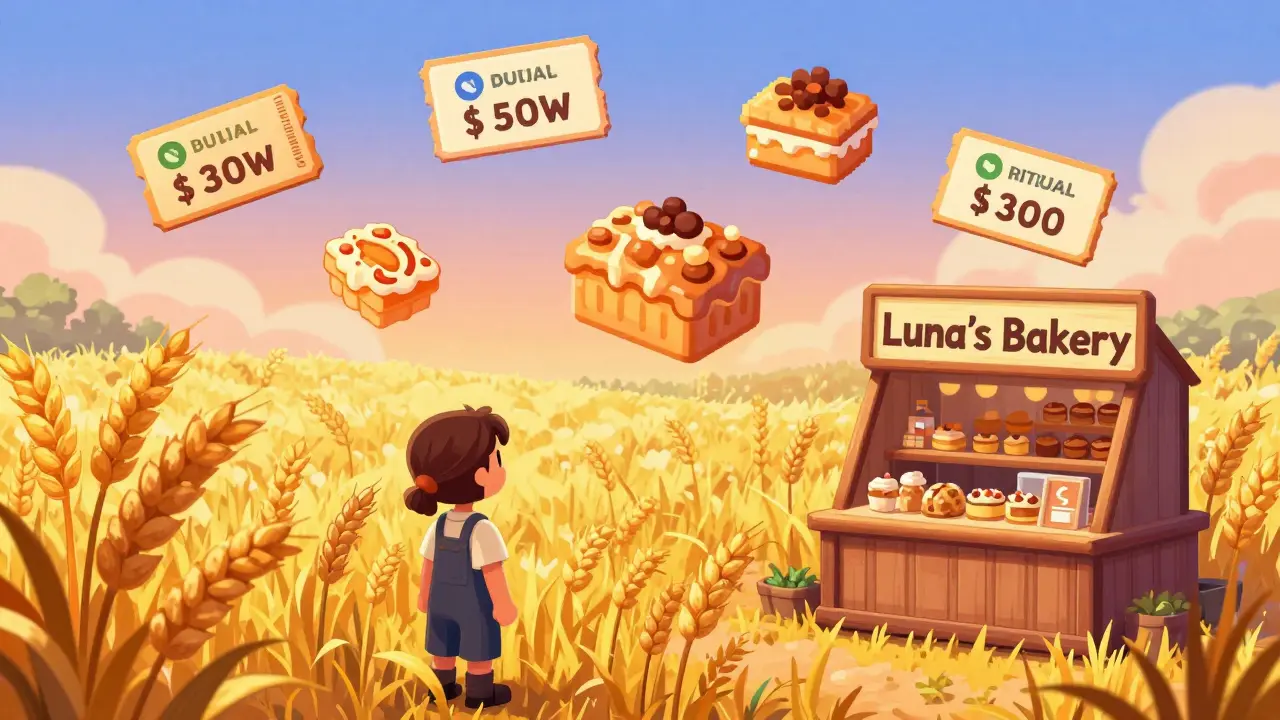
One bakery in Portland ran a campaign in Stardew Valley-players could grow “Luna’s Bakery” wheat and harvest virtual pastries. In return, they got a 15% off coupon for the real store. Sales jumped 37% that month.
The Future: Ads That Learn and Adapt
The next wave of in-game ads won’t just be placed-they’ll be personalized.
Imagine a racing game that shows you ads for tires based on your driving style. Or a cooking game that recommends kitchen gadgets you’ve never used but clearly need. AI is already testing this in beta versions of The Sims 5 and Horizon Forbidden West updates.
By 2027, in-game ads will use real-time biometrics-like heart rate or eye tracking via VR headsets-to adjust ad content. If you’re stressed during a boss fight, you might see a calming tea ad. If you’re celebrating a win, you’ll get a party snack offer.
This isn’t sci-fi. It’s happening. And the brands that get ahead won’t just advertise-they’ll become part of the player’s emotional journey.
Final Thought: It’s Not About Selling. It’s About Belonging.
The best in-game ads don’t feel like ads at all. They feel like things that belong in that world. A soda can in a post-apocalyptic game? Makes sense. A luxury watch in a prison escape game? Doesn’t.
Players aren’t rejecting ads. They’re rejecting irrelevance. The companies winning now aren’t the ones spending the most money. They’re the ones asking: Does this belong here?
If the answer is yes, then the game becomes a living billboard. And the player? They don’t even know they’re being reached.
Are in-game ads effective for small businesses?
Yes, especially on mobile platforms. Small businesses can run targeted campaigns in games like Candy Crush or Clash Royale for under $1,000. The key is matching your brand to the game’s audience and offering real value-like discounts or free virtual items-that players actually want.
Do players dislike in-game ads?
Only if they’re intrusive, irrelevant, or forced. Players accept ads that feel natural-like a branded car in a racing game or a poster in a virtual city. But if ads interrupt gameplay or clutter the screen, they’ll get backlash. The most successful campaigns give players control, like the option to hide ads or earn rewards by engaging with them.
What’s the difference between static and dynamic in-game ads?
Static ads are fixed in the game world-like a billboard that never changes. Dynamic ads update in real time based on player location, time, or behavior. For example, a player in London might see a local coffee shop ad, while someone in Tokyo sees a different one. Dynamic ads are more expensive but far more targeted and effective.
Can I run in-game ads without a big budget?
Absolutely. Platforms like Unity Ads and AdColony let small brands buy ad space in mobile games for as little as $500. Focus on games with audiences that match your customers. Offer a simple incentive-like a discount code or free virtual item-to drive action without spending big.
Are in-game ads the future of advertising?
They’re already a major part of it. With over 3.2 billion gamers worldwide and ad revenue from games projected to hit $80 billion by 2027, in-game advertising is growing faster than TV or social media ads. The future will be personalized, interactive, and seamless-blending ads into gameplay so naturally that players don’t even notice they’re being marketed to.
I work as a marketing specialist with an emphasis on the digital sphere. I'm passionate about strategizing and executing online marketing campaigns to drive customer engagement and increase sales. In my free time, I maintain a blog about online marketing, imparting insights on trends and tips. I'm dedicated to life-long learning and look forward to growing in my field.