

Stop staring at a blank screen. If you are still writing every blog post, email subject line, and social media caption from scratch in 2026, you are leaving money on the table. The gap between marketers who use ChatGPT is an advanced large language model developed by OpenAI that generates human-like text based on prompts and those who don’t isn't just about speed anymore; it’s about scale and personalization. You can produce high-quality assets faster, test more variations, and keep your brand voice consistent across every channel.
This isn't about replacing your team with robots. It is about giving your team superpowers. When used correctly, this AI tool handles the heavy lifting of drafting and ideation, freeing you up to focus on strategy, data analysis, and creative direction. Here is how to integrate it into your workflow without sounding like a machine.
Mastering Prompt Engineering for Marketing Context
The biggest mistake beginners make is treating the AI like a search engine. They type "write a blog post about shoes" and get generic fluff. To get results that actually convert, you need to treat Prompt Engineering is the practice of designing precise inputs to guide an AI model toward desired outputs as a core skill. Think of it as briefing a junior copywriter who knows everything but nothing about your specific brand.
You must provide context. Who is the audience? What is the tone? What is the goal? A weak prompt yields a weak result. A strong prompt acts as a constraint that forces creativity within boundaries. For example, instead of asking for a product description, try this structure:
- Role: Act as a senior copywriter for a luxury skincare brand.
- Audience: Women aged 35-50 interested in anti-aging science.
- Goal: Drive clicks to the checkout page.
- Tone: Sophisticated, scientific, yet accessible.
- Constraints: Use short sentences, avoid jargon, include one benefit-focused headline.
When you feed these details into the model, the output shifts from generic to targeted. This precision reduces editing time significantly. You spend less time rewriting and more time refining. Always iterate. If the first draft misses the mark, tell the AI exactly what was wrong. "Make it punchier" or "Remove the passive voice" are valid follow-up commands.
Scaling Content Creation Without Losing Quality
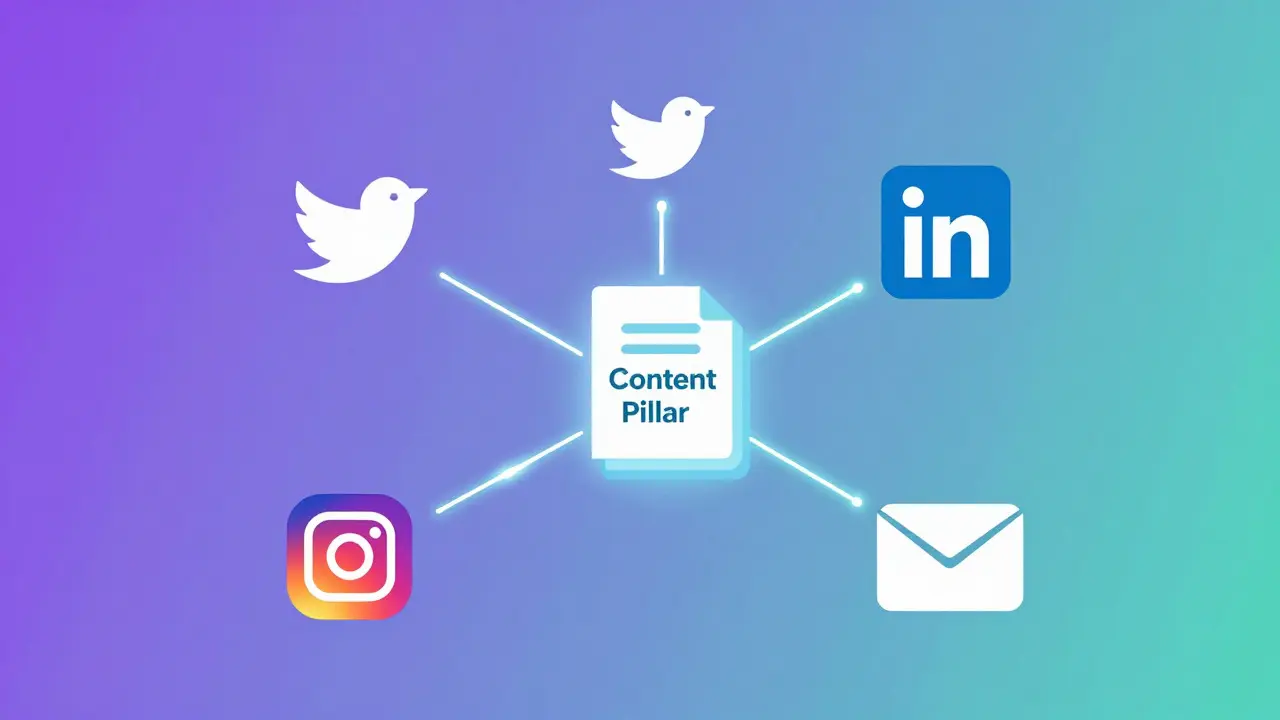
Content marketing requires volume. SEO demands fresh pages. Social media needs daily posts. Doing all this manually burns people out. Using AI allows you to create a Content Pillar Strategy is a method of creating comprehensive, authoritative long-form content on core topics and breaking it down into smaller pieces efficiently. Start with one deep-dive article. Then, use the AI to repurpose that single piece into multiple formats.
Take a 2,000-word guide on "Sustainable Packaging." Feed it into the tool and ask for:
- A thread of five tweets summarizing key stats.
- A LinkedIn post focusing on business ROI.
- An Instagram caption with relevant hashtags.
- A newsletter blurb teasing the full article.
- Five FAQ questions and answers for the website footer.
This multiplies your output tenfold without starting from zero each time. However, quality control remains essential. The AI might hallucinate facts or miss nuanced brand nuances. Always fact-check statistics. Ensure the voice matches your style guide. The AI provides the raw material; you provide the polish. This hybrid approach maintains authenticity while achieving the volume required for modern algorithms.
Personalizing Email Campaigns at Scale
Email marketing faces a crisis of attention. Inboxes are crowded. Generic blasts get ignored. Personalization is the antidote, but writing unique emails for thousands of subscribers is impossible for humans alone. This is where generative AI shines. By integrating customer data points-such as past purchases, browsing history, or lifecycle stage-you can generate hyper-relevant subject lines and body copy.
Imagine segmenting your list by "Cart Abandoners" versus "Repeat Buyers." For the abandoners, the AI can draft urgent, scarcity-driven messages referencing the specific items left behind. For repeat buyers, it can craft appreciation-themed offers highlighting new products similar to their previous purchases. The key is dynamic insertion. You aren't just changing the name; you are changing the narrative arc based on behavior.
Test different angles. Ask the AI to write three versions of the same email: one focused on fear of missing out (FOMO), one on value/savings, and one on social proof. Run an A/B test. The data will tell you which psychological trigger works best for that segment. Over time, you build a library of high-performing templates that adapt to user behavior automatically.
Optimizing SEO and Keyword Research
Search engine optimization has evolved beyond simple keyword stuffing. Google's algorithms now prioritize intent and semantic relevance. Understanding Search Intent is the underlying goal a user has when entering a query into a search engine is crucial. The AI helps decode this quickly. Instead of guessing why someone searches for "best running shoes," ask the model to analyze the likely intent behind that query.
It can identify whether users want commercial comparisons, informational guides, or transactional links. Based on that insight, you can structure your content accordingly. If the intent is informational, create a buying guide. If it is commercial, create a comparison table. This alignment improves rankings because you satisfy the user's actual need.
Furthermore, use the tool to brainstorm long-tail keywords. Provide a seed keyword like "digital marketing" and ask for twenty related questions people might ask. These questions often reveal content gaps competitors have missed. Targeting these specific queries builds topical authority. Remember, however, to verify search volume using dedicated SEO tools like Ahrefs or SEMrush. The AI suggests ideas; data validates them.
Enhancing Social Media Engagement
Social media moves fast. Trends shift overnight. Staying relevant requires agility. Generative AI can monitor trending topics and suggest angles for your brand. But engagement isn't just about posting; it's about conversation. Use the tool to draft responses to comments and DMs. Maintain a helpful, friendly tone even when dealing with complaints.
Create interactive content ideas. Polls, quizzes, and challenges drive higher engagement rates. Ask the AI to design a quiz topic relevant to your industry. For a fitness brand, it might suggest "Which Workout Style Matches Your Personality?" Then, generate the questions and results descriptions. This gamification keeps users on your platform longer and increases shareability.
Also, leverage visual prompts. While text-based models don't create images directly, they can write detailed prompts for image generation tools like Midjourney or DALL-E. Describe the exact composition, lighting, and style needed for your campaign visuals. This ensures your imagery aligns perfectly with your messaging strategy.

Data Analysis and Reporting Made Simple
Marketers drown in data. Google Analytics, social insights, CRM reports-it’s overwhelming. Extracting actionable insights takes time. Paste anonymized data summaries or CSV snippets into the AI and ask for interpretation. "What trends do you see in this month's traffic data?" or "Why did conversion rates drop last week?" The model can spot correlations you might miss.
It can also help write monthly reports. Instead of spending hours formatting spreadsheets, provide the key metrics and achievements. Ask the AI to draft a narrative summary for stakeholders. Focus on outcomes, not just numbers. Explain what the data means for future strategy. This turns raw data into strategic intelligence, helping leadership make informed decisions faster.
| Task | Traditional Approach | AI-Assisted Approach | Time Saved |
|---|---|---|---|
| Blog Post Drafting | Research + Writing: 4-6 hours | Prompting + Editing: 1 hour | ~80% |
| Email Subject Lines | Brainstorming: 30 mins | Generation of 20 options: 5 mins | ~85% |
| Social Media Calendar | Planning + Copywriting: 2 days | Bulk Generation + Review: 4 hours | ~75% |
| SEO Keyword Research | Manual Search + Tools: 3 hours | Idea Gen + Validation: 1 hour | ~60% |
Avoiding Common Pitfalls and Ethical Concerns
With great power comes great responsibility. Relying too heavily on AI can lead to homogenized content. If everyone uses the same prompts, everyone sounds the same. Differentiate yourself by injecting unique brand stories, real customer testimonials, and proprietary data. The AI should enhance your voice, not replace it.
Factual accuracy is another risk. Models can hallucinate. Always verify claims, especially regarding regulations, medical advice, or financial data. Transparency matters. Consider disclosing when AI assists in creation, depending on industry standards and consumer expectations. Building trust is paramount. If readers feel deceived by robotic content, they will leave.
Finally, protect your data. Avoid pasting sensitive customer information (PII) into public AI models unless using enterprise-grade solutions with strict privacy controls. Data security breaches damage reputation irreparably. Treat your prompts as confidential briefings.
Next Steps for Implementation
Start small. Pick one repetitive task, like writing meta descriptions or drafting social captions. Experiment with different prompts. Measure the impact on engagement and efficiency. Gradually expand to more complex tasks like blog outlines or email sequences. Train your team on prompt best practices. Create a shared library of successful prompts for your organization. This institutional knowledge becomes a competitive advantage.
Stay updated. The technology evolves rapidly. New features and models emerge frequently. Follow industry news, join communities, and continuously refine your approach. The goal is not to automate everything, but to amplify human creativity and strategic thinking. By blending AI efficiency with human empathy, you build a marketing strategy that resonates deeply and scales effectively.
Is ChatGPT free for commercial marketing use?
OpenAI offers both free and paid tiers. The free version may have limitations on usage and priority access. For commercial purposes, especially involving sensitive data or high-volume generation, paid plans like Plus or Enterprise are recommended. Check the latest terms of service for licensing rights on generated content.
Will AI-generated content hurt my SEO?
Not if done correctly. Google values helpful, original, and expert content. Purely AI-written content without human oversight can be thin or inaccurate, hurting rankings. However, AI-assisted content that adds unique insights, proper editing, and E-E-A-T signals performs well. Focus on quality and user intent.
How do I maintain brand voice with AI?
Create a detailed brand voice guide. Include examples of good and bad copy, preferred vocabulary, and tone descriptors. Feed this context into your prompts. Consistently review outputs against your guidelines. Over time, you can fine-tune custom instructions to align closer with your brand identity.
Can ChatGPT replace a human copywriter?
No. It is a tool, not a replacement. Humans provide strategy, emotional intelligence, cultural nuance, and creative direction. AI excels at speed, volume, and initial drafts. The most effective teams combine human oversight with AI efficiency to achieve superior results.
What are the best practices for prompt engineering?
Be specific. Define role, audience, goal, tone, and constraints. Iterate based on feedback. Use examples of desired output. Break complex tasks into smaller steps. Test variations. Keep a library of successful prompts. Clear communication leads to better results.
I'm Eliza Galloway, a dedicated and passionate marketing professional with over two decades of experience in the field. Apart from my day-to-day analyses of market trends, I spend my time exploring and implementing comprehensive marketing strategies for a broad range of local and international clients. I'm also an avid blogger, particularly passionate about online marketing. Sharing my knowledge and insights via my writings, I seek to motivate and inspire others in understanding the dynamic world of marketing.